
History of Conic Sections
Throughout history, the study of conic sections has evolved from an intriguing geometric puzzle into a cornerstone of mathematics, with applications extending from astronomy and physics to modern geometry and engineering.
In this article, we explore the timeline of the development of conic sections, tracing their journey from ancient discoveries to their establishment in modern mathematics.
Table of Contents
Ancient Greece
The history of conic sections began in Classical Antiquity during the 4th century BCE with Menaechmus, a pupil of Eudoxus, who is recognized as the first mathematician to systematically investigate these curves.
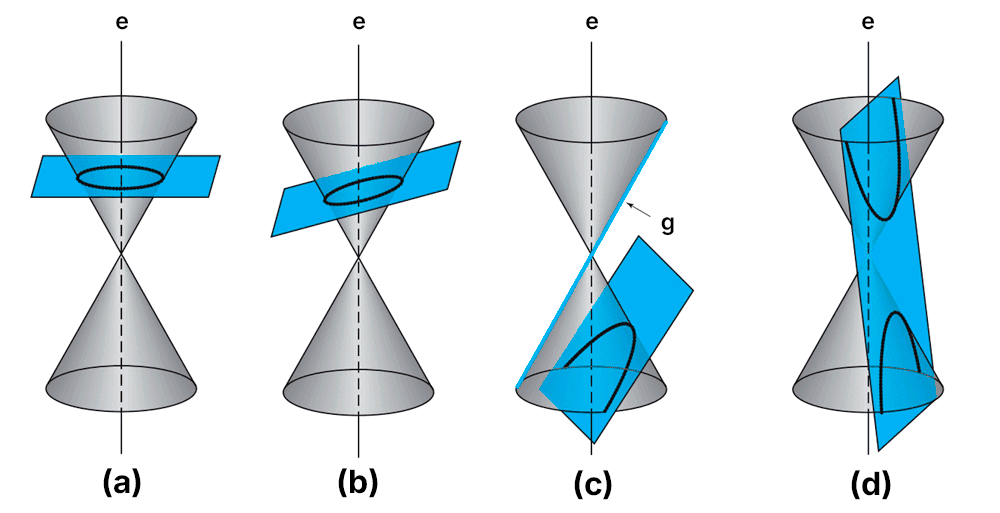
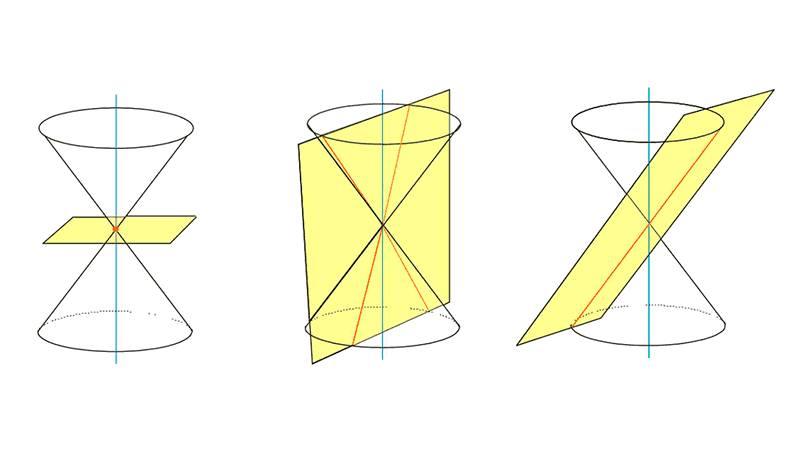
Menaechmus discovered these geometric curves while attempting to solve the famous problem of doubling the cube, also known as the Delian problem. His approach involved analyzing the intersections of a cone with various cutting planes, giving rise to the shapes known today as the ellipse, the parabola, and the hyperbola. Although his original writings have not survived, historical accounts confirm that he used geometric properties and proportions to characterize these curves, laying the groundwork for their mathematical study.
Archimedes made substantial contributions to the study of conics in the 3rd century BCE. His investigations focused primarily on the measurement of areas and volumes, tackling problems that involved the geometric properties of these curves. In his treatise "Quadrature of the Parabola," Archimedes succeeded in squaring a parabolic segment—determining the exact area enclosed between a parabola and a straight secant line. Furthermore, in "On Conoids and Spheroids," he calculated the area of an ellipse and examined solids of revolution generated by conic sections.
Around the same era, Euclid significantly influenced the field through his foundational work, the "Elements," even though his surviving texts do not focus primarily on conics. In this treatise, Euclid established the geometric principles that later mathematicians relied upon to investigate the properties of conic curves.
The most decisive breakthrough came from Apollonius of Perga, a Greek mathematician of the late 3rd and early 2nd century BCE. Known as "The Great Geometer," Apollonius systematized and greatly expanded the theory of conic sections in his masterwork "Conics," an eight-book treatise where he rigorously defined the three primary curves and coined the terms still used today: ellipse, parabola, and hyperbola.
Apollonius introduced a more general and abstract geometric framework, treating conics as sections of a single double-napped circular cone cut by planes at varying angles. He formulated an extensive mathematical theory describing their focal and asymptotic properties in remarkable detail, setting the standard for centuries of geometric inquiry.

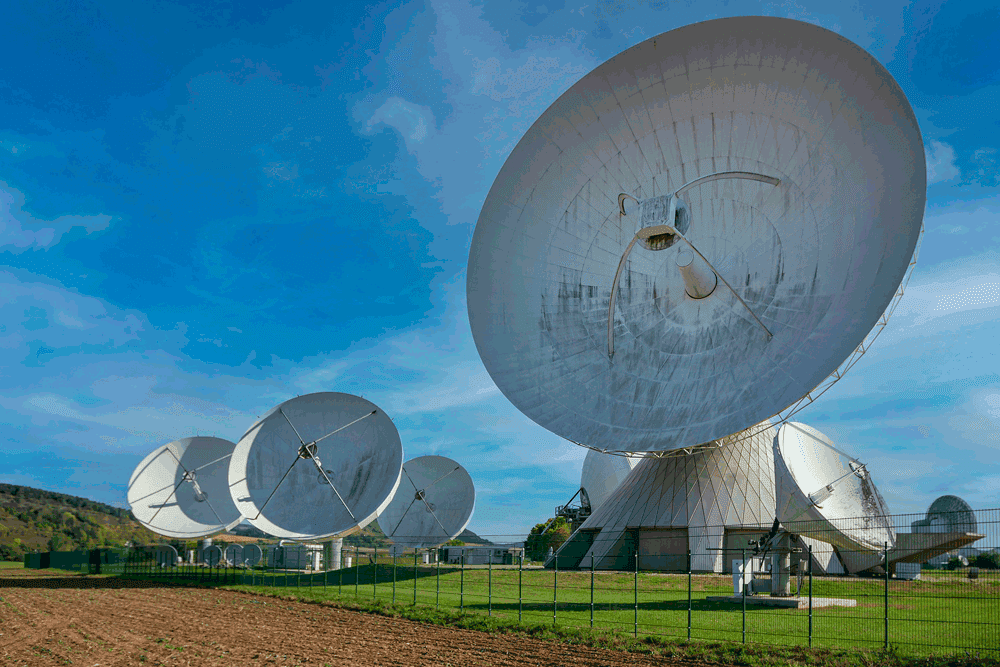
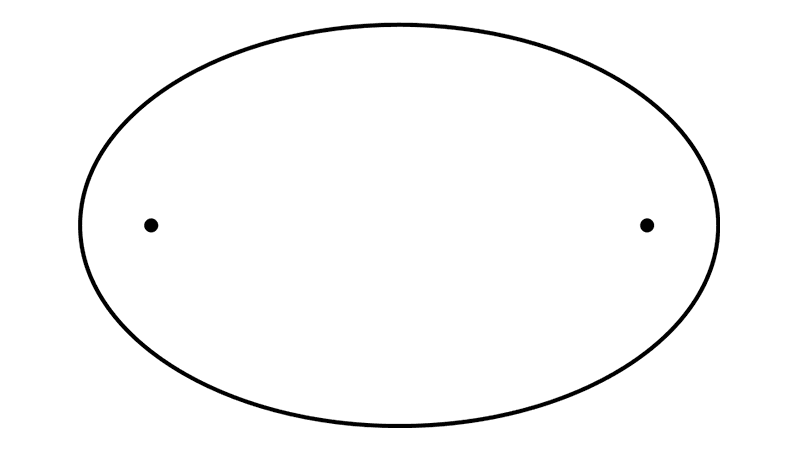
Among his discoveries, Apollonius detailed the reflective properties of conics, which govern how light rays and acoustic waves behave when reflecting off curved surfaces. For instance, in an ellipsoidal mirror formed by rotating an ellipse about its major axis, any ray originating from one focus reflects and converges precisely at the other focus. Similarly, if incoming parallel rays strike a parabolic mirror parallel to its axis of symmetry, they reflect and converge at the parabolic focus.
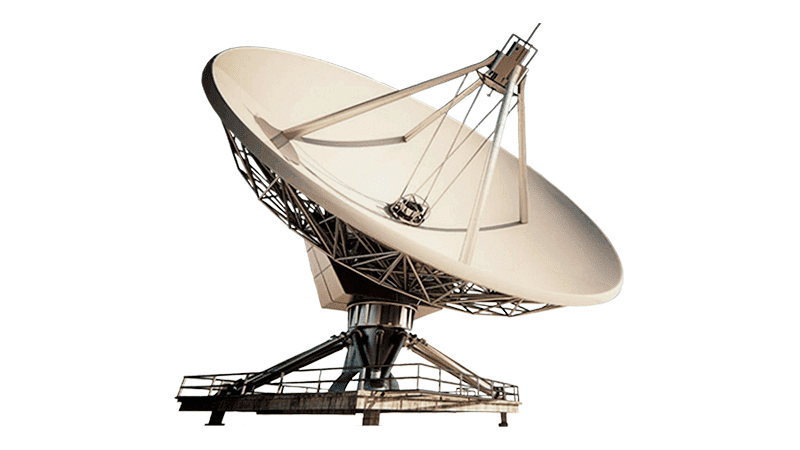
These reflective principles remain fundamental to modern science and technology, serving as the operating basis for optical telescopes, parabolic satellite antennas, radar systems, and solar concentrators.
The Middle Ages
Following the decline of classical scholarship in Western Europe during the Middle Ages, the mathematical works of the ancient Greeks—including Apollonius's treatises—were preserved, studied, and translated into Arabic during the Islamic Golden Age between the 9th and 11th centuries. Islamic mathematicians such as Al-Khwarizmi and Omar Khayyam played an essential role in preserving and expanding this geometric knowledge.
Khayyam used conic sections to construct geometric solutions for cubic equations, establishing an early bridge between geometric curves and polynomial algebra. Through medieval translation movements, notably via the Toledo School of Translators during the 12th and 13th centuries, these classical texts re-entered Europe, where mathematicians such as Fibonacci reintroduced them to Western scholarship.
Renaissance and Early Modern Era
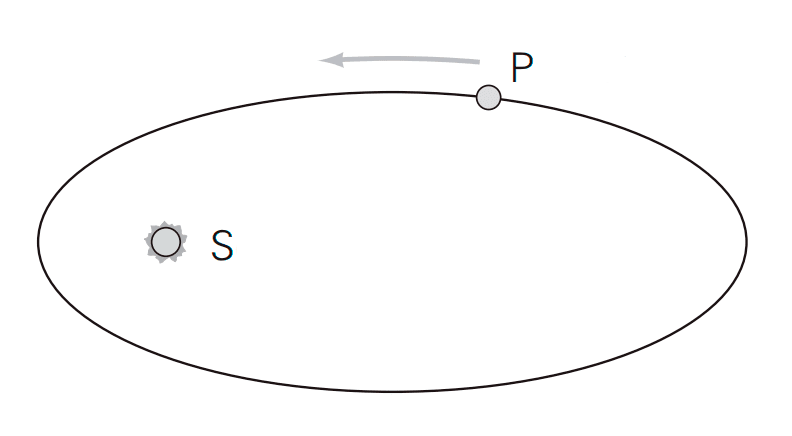
During the Renaissance and the Scientific Revolution (15th to 17th centuries), the geometric ideas of antiquity underwent profound development. In the early 17th century, Johannes Kepler applied conic sections directly to physical astronomy. In his work "Astronomia nova," Kepler demonstrated that planetary orbits around the Sun are ellipses rather than circles, formulating what is now known as Kepler's First Law. Kepler was also the first to coin the mathematical term "focus" (plural "foci") to identify these defining points.
Concurrently, Girard Desargues and Blaise Pascal advanced the theory of conics from the standpoint of early projective geometry. Pascal formulated the celebrated "Mystic Hexagram Theorem" (Pascal's Theorem), which establishes an invariant collinearity property for hexagons inscribed within any conic section.
Shortly thereafter, René Descartes and Pierre de Fermat transformed the study of conics by establishing analytic geometry, translating purely geometric curves into algebraic equations. This analytic framework allowed mathematicians such as John Wallis, in his 1655 treatise "Tractatus de sectionibus conicis," to define conic sections purely as second-degree polynomial equations without relying on stereometric cone intersections.
Building on Cartesian algebra and synthetic geometry, Jan de Witt published "Elementa Curvarum Linearum," where he systematized the focus-directrix formulation and introduced the term "directrix," standardizing modern coordinate-based conic analysis.
Later in the 17th century, Isaac Newton synthesized conic geometry with universal gravitation in his masterwork, the Philosophiæ Naturalis Principia Mathematica. Newton proved that under an inverse-square gravitational force, celestial trajectories must trace a conic section—ellipses for bound orbits, and parabolas or hyperbolas for escape trajectories—providing the mathematical proof for Kepler's laws.
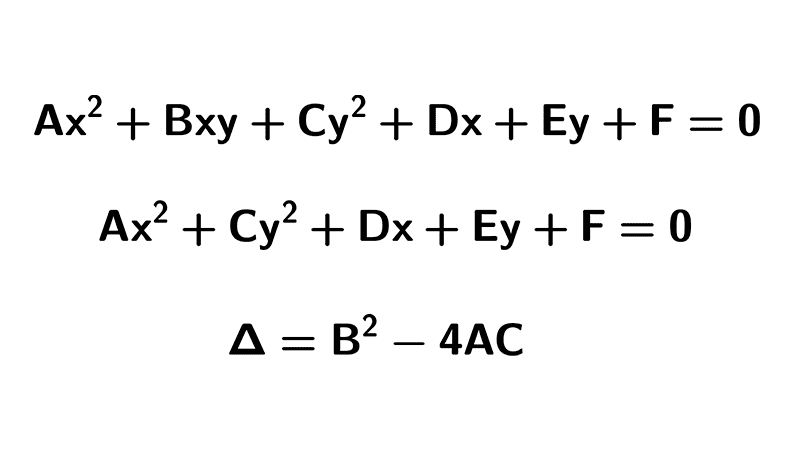
Throughout the 18th century, mathematicians such as Leonhard Euler and Pierre-Simon Laplace integrated conic sections into differential calculus and analytical mechanics. Euler systematized the general second-degree quadratic equation in two variables, establishing classification criteria via coordinate invariants. Laplace further incorporated these conic formulations into celestial mechanics to analyze complex orbital perturbations and gravitational interactions across the solar system.
Did you find this useful? Rate it!
0.0 / 5 — 0 votes

HOW TO CITE THIS ARTICLE
Machado, D. (2026, October 28). History of Conic Sections. Exponty. https://exponty.com/en/history-of-conic-sections
Parametric Equations of Conic Sections
Polar Equations of Conic Sections
Applications of Conic Sections
Eccentricity of Conic Sections
Degenerate Conic Sections
General Equation of Conic Sections
Conic Sections Practice Problems with Solutions
Parabola
Hyperbola
Ellipse
Leave a Reply
Related posts