
Applications of Conic Sections
Conic sections are present in numerous aspects of everyday life: satellite dishes and telescopes that use parabolas to focus signals and light; the elliptical orbits of satellites, essential for global communications; architecture that incorporates hyperbolic and elliptical structures; the parabolic trajectories of launched objects; car headlights engineered to project light efficiently; and many other applications.
Beyond their aesthetic appeal, conic sections have a remarkable reflective property that describes how light rays or sound waves behave when striking their surfaces. This geometric characteristic is especially prominent in ellipses, parabolas, and hyperbolas.
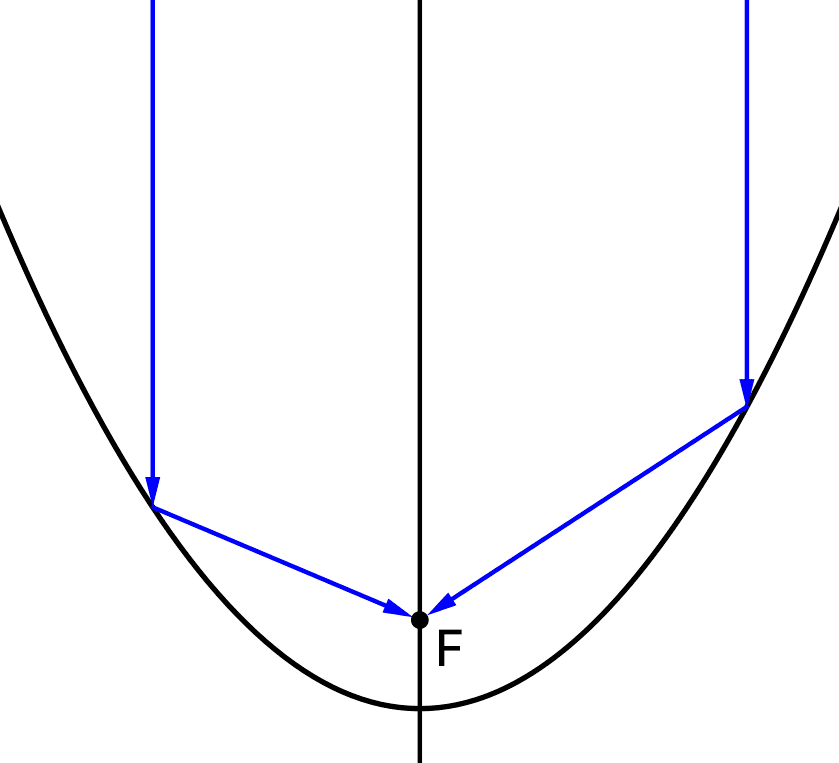
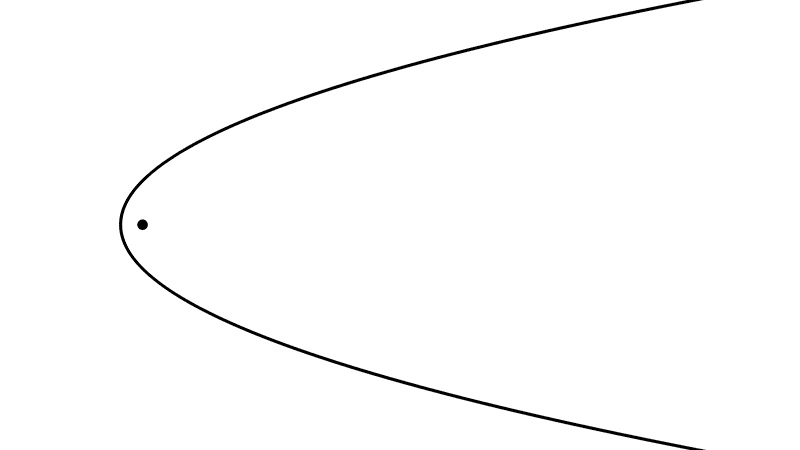
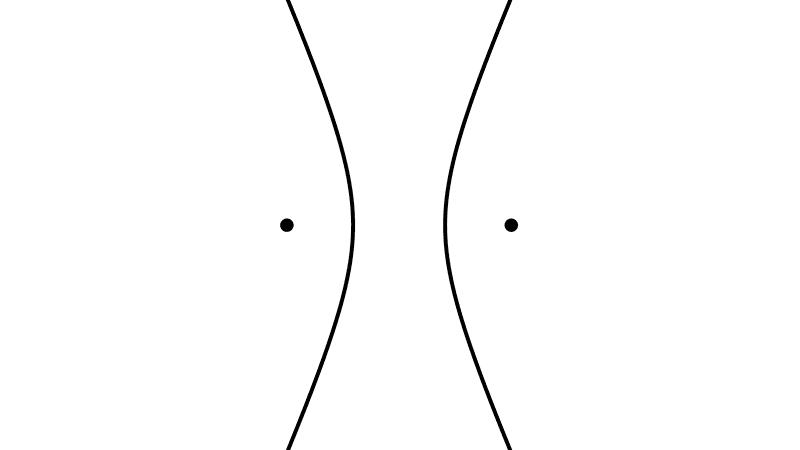
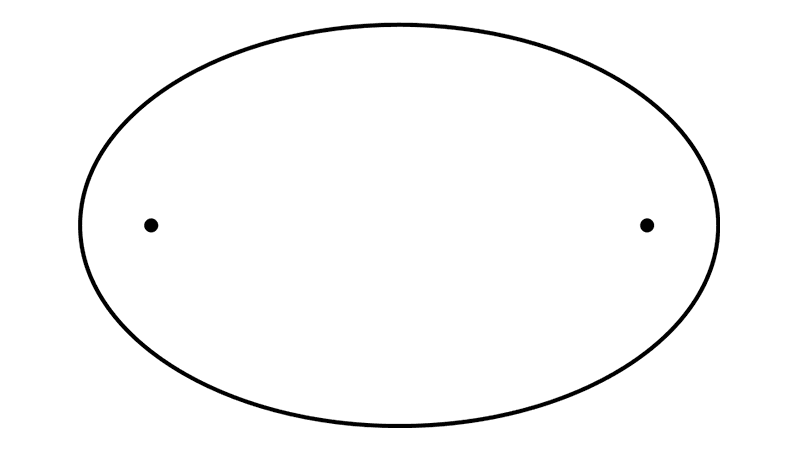
In an ellipse, any light ray or sound wave emanating from one focus reflects directly toward the other focus. In a hyperbola, a ray directed toward one focus reflects along a line directly away from the other focus. In a parabola, a light ray originating at the focus reflects parallel to its axis of symmetry. Conversely, any incoming ray parallel to the axis of symmetry reflects directly toward the focus. This property forms the foundation for designing satellite dishes and parabolic reflectors, which concentrate incoming signals or light into a single point.
Below, we explore the importance of conic sections and how they are used across different fields.
Table of Contents
Architecture and Design
Conic sections have played a major role in architecture over the centuries, valued both for their aesthetic qualities and their structural advantages. Among these, the ellipse has been particularly prominent due to its distinctive shape and the relative simplicity of tracing it using geometric techniques, such as the pins-and-string method (gardener's method).
An iconic example of the ellipse in classical architecture is the Roman Colosseum, one of the wonders of the ancient world. The floor plan of the Colosseum is based on concentric ellipses, stretching from its outer perimeter to the central arena.
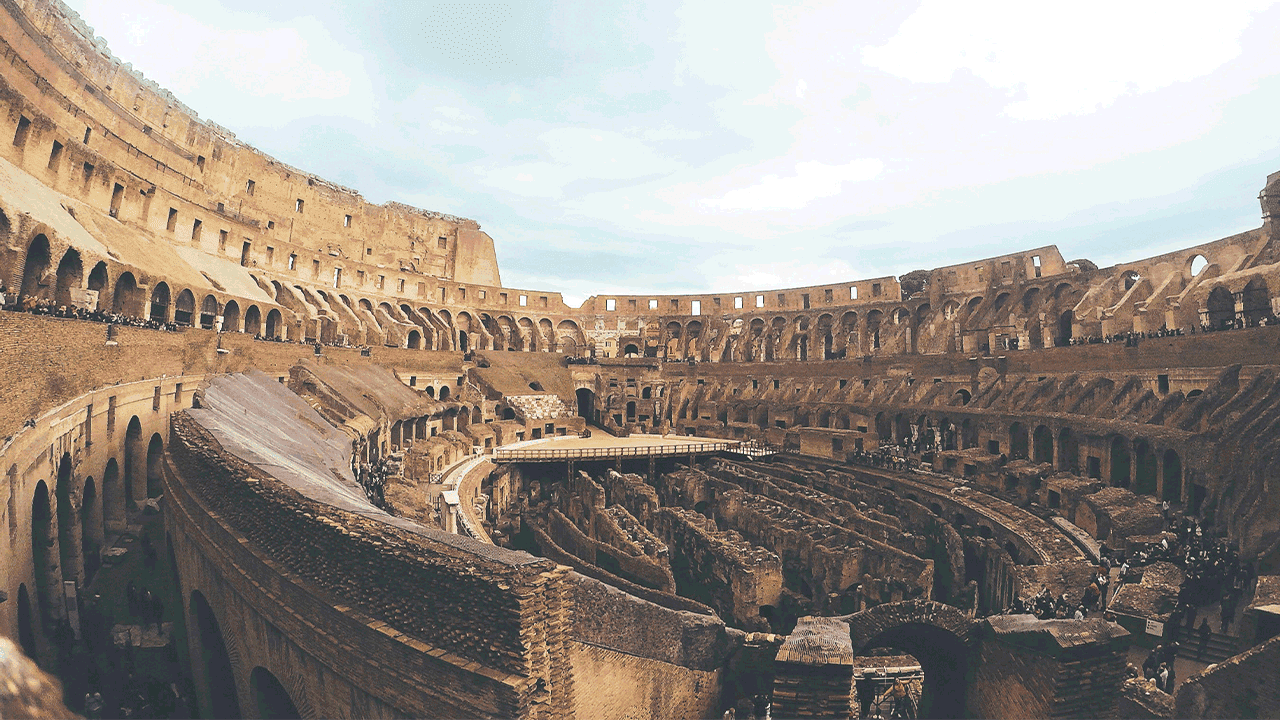

Roman Colosseum
The ellipse not only served an aesthetic purpose, but also allowed for an efficient seating arrangement and superior acoustics, enhancing the spectator experience during performances. This innovative layout was replicated in Roman amphitheaters throughout the Empire.
During the Renaissance and Baroque eras, the ellipse remained a dominant architectural shape. For example, the Ponte Santa Trinita in Florence, built in the 16th century by Bartolomeo Ammanati, was the first bridge to use an elliptical arch. This innovation yielded a lighter, more graceful structure compared to traditional semicircular arches. Although the bridge was destroyed during World War II, it was faithfully reconstructed in 1958 according to its original design, underscoring its historical and architectural significance.


Another notable example of the ellipse in Baroque architecture is the Church of Sant'Andrea al Quirinale in Rome, designed by Gian Lorenzo Bernini. This church features an elliptical floor plan that not only brings a dynamic spatial energy to the interior, but also emphasizes the symbolic focus of the main altar, aligned with one of the ellipse's primary axes.

The application of conic sections in architecture extends beyond structural integrity and visual aesthetics; it also plays an essential role in acoustics. A renowned architectural phenomenon is the whispering gallery, where curved architectural surfaces channel sound waves across vast spaces.

While circular domes allow sound to travel along their perimeter, true elliptical rooms harness the focal properties of the ellipse: a whisper produced at one focus reflects directly across the room to the other focus, allowing clear communication that remains virtually inaudible to anyone standing between them. A famous example of this elliptical acoustic reflection is the National Statuary Hall at the U.S. Capitol in Washington, D.C.
Engineering
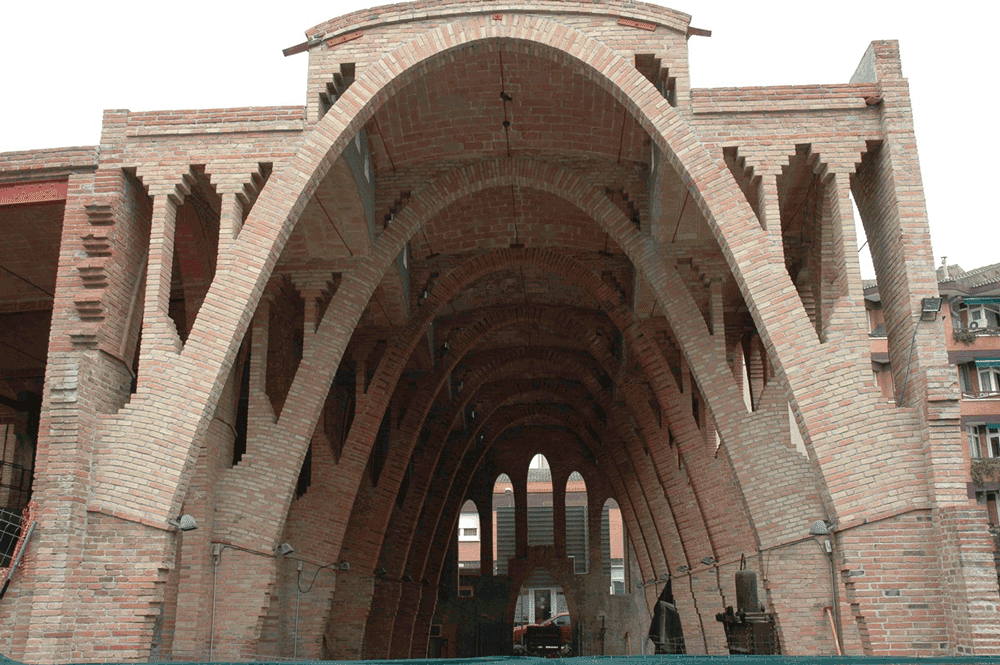
Conic sections provide innovative and efficient solutions across numerous engineering disciplines. A prominent example is the use of parabolic arches in bridge and roof design. Because they distribute vertical loads uniformly, parabolic arches allow engineers to design structures that are both structurally optimized and aesthetically striking.

Parabolas are also central to the design of parabolic reflectors, widely used in antennas and lighting systems. The mathematical property of the parabola—where all rays parallel to its axis of symmetry reflect toward a single focal point—is utilized to concentrate signals or light, maximizing transmission efficiency.
A similar principle applies to parabolic solar cookers, which harness solar energy by focusing sunlight onto a focal point using a parabolic mirrored dish. This setup can reach temperatures exceeding 200°C (392°F), enabling rapid food preparation without fuel or electricity—making it a sustainable solution for off-grid communities.
Ellipses are used in industrial heating systems engineered to focus thermal energy precisely. In an elliptical optical furnace, a heat source (such as a high-intensity lamp) is placed at one focus of an elliptical chamber, while the specimen to be heated is situated at the other focus.
This configuration directs radiant heat evenly and intensely onto the target material, a crucial requirement in high-purity crystal growth and materials science.
Satellite orbits also rely directly on the mathematics of conic sections—specifically ellipses. Artificial satellites orbit Earth along elliptical paths, with Earth located at one focus. In aviation, flight trajectories and gravitational assist maneuvers often trace parabolic or hyperbolic arcs to optimize fuel consumption and transit efficiency.
Furthermore, elliptical and hyperbolic geometries are vital in mechanical power transmission. Elliptical gears allow machines to vary rotational speed smoothly within a single cycle, an important feature in precision manufacturing and packaging machinery.
Hyperbolas, on the other hand, are fundamental in the design of hypoid gears. These gears transmit power between non-intersecting, non-parallel shafts—a critical component in automobile differentials.

In large-scale infrastructure, hyperbolic cooling towers in nuclear and thermal power plants use a hyperboloid shape for structural and aerodynamic stability. The geometry provides high resistance to strong lateral winds while creating a natural draft that maximizes heat dissipation.

In car headlights, the bulb is positioned at the focus of a parabolic reflector. When light hits the reflective interior surface, it is directed forward in a parallel beam, illuminating the road ahead without scattering.
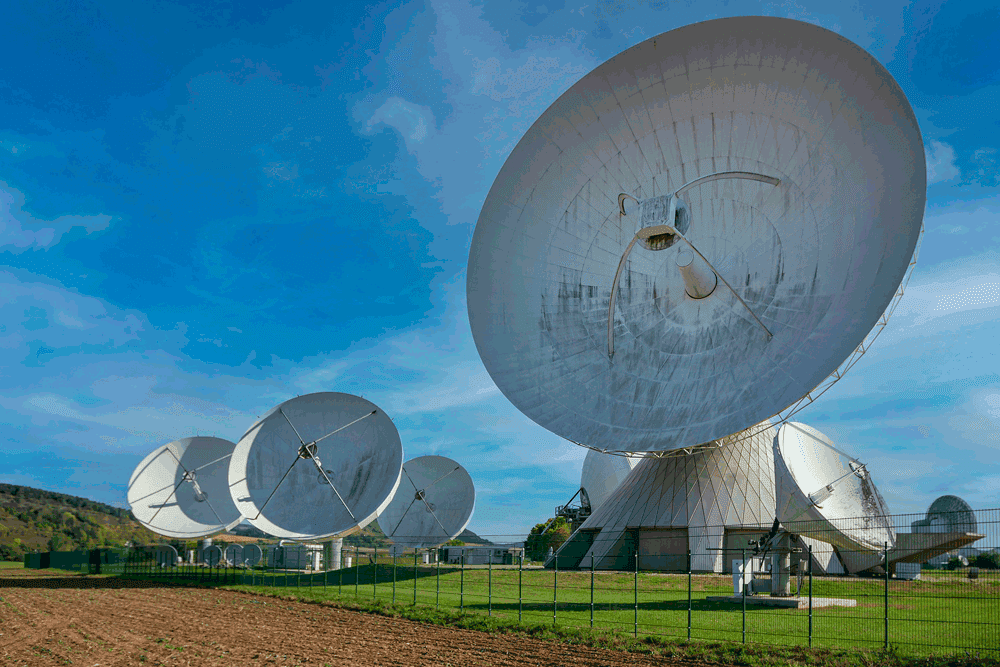
The same principle applies to searchlights, flashlights, and satellite dishes. In satellite communications, incoming electromagnetic signals (such as radio waves or microwaves) strike the parabolic surface and reflect cleanly toward the focal point.
A receiver located at this focal point—commonly known as an LNB (Low-Noise Block downconverter)—captures and converts the focused signals into digital information for television or internet access. The parabolic curvature ensures that incoming parallel rays arrive at the receiver in phase, maximizing signal reception and quality.
Physics
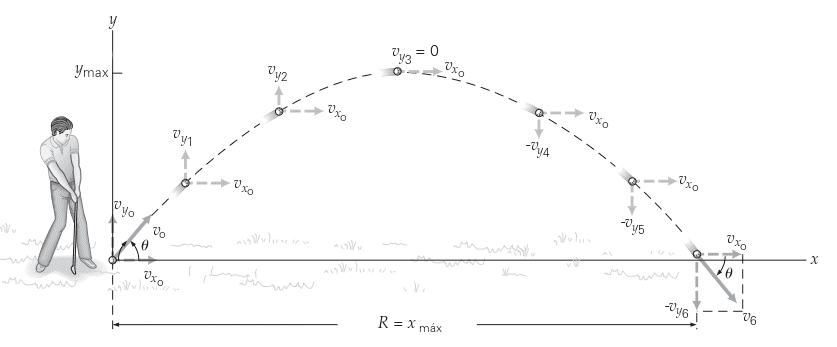
The trajectory of a projectile under uniform gravity follows a parabolic path—a foundational principle in classical kinematics and ballistics with applications ranging from aerospace engineering to sports science.
When an object is launched into the air, its uniform horizontal velocity combines with continuous vertical acceleration due to gravity, producing a trajectory modeled mathematically by a parabola. This is seen every day when throwing a ball: it rises to a peak vertex before descending along a symmetric curve.
Understanding parabolic projectile motion is essential for predicting ballistic trajectories, optimizing launch angles in sports and artillery, and modeling rocket ascents.
Astronomy
The discovery of conic sections in celestial motion revolutionized our understanding of the cosmos. Throughout antiquity and the Middle Ages, celestial bodies were believed to move in perfect circles. Supported by Plato and Ptolemy, this geocentric circular view dominated astronomical thought for centuries, as the circle was considered the purest geometric form.
In the early 17th century, Johannes Kepler radically altered this perspective. Analyzing precise observational data compiled by Tycho Brahe, Kepler concluded that planetary orbits were not circular, but elliptical.
In his First Law of Planetary Motion, Kepler demonstrated that planets orbit the Sun in elliptical paths, with the Sun situated at one focus of the ellipse, while the other focus remains unoccupied. This discovery resolved long-standing discrepancies in celestial mechanics, providing a far more accurate model than circular epicycles.
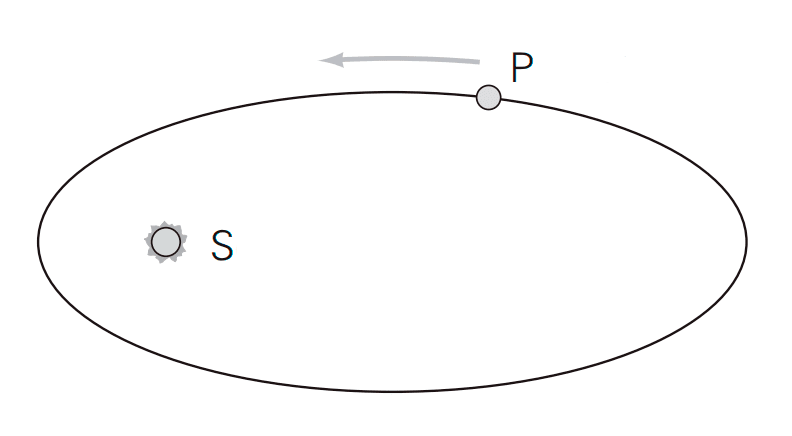
Kepler's laws also explained cometary paths. While periodic comets such as Halley's Comet travel on elongated elliptical orbits that return periodically to the inner Solar System, non-periodic comets travel on parabolic or hyperbolic trajectories, swinging past the Sun once before escaping interstellar space indefinitely.
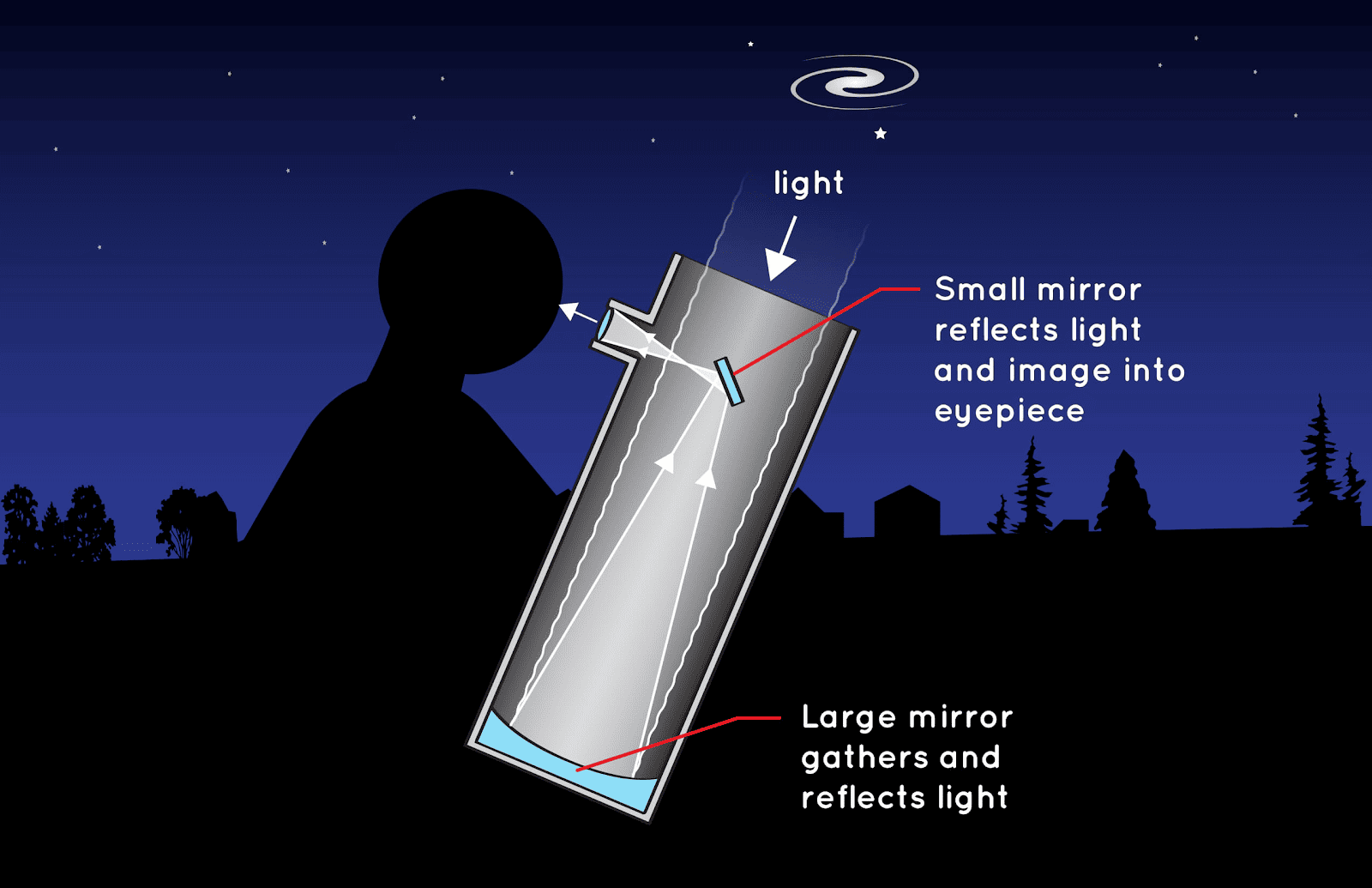
In astronomical optics, conic surfaces are indispensable. Modern reflecting telescopes, such as those operated by NASA and major research observatories, utilize parabolic primary mirrors to gather and focus starlight.
Because a parabolic mirror reflects all incoming parallel rays to a single focal point, it eliminates spherical aberration. In complex telescope configurations like the Cassegrain or Ritchey-Chrétien designs, hyperbolic secondary mirrors are paired with parabolic or hyperbolic primaries to produce sharp, wide-field celestial images across cosmological distances.

Telecommunications
Before satellite-based GPS became standard, one of the primary long-range radionavigation systems was LORAN (Long Range Navigation), which relied on hyperbolic geometry to pinpoint receiver coordinates.
Developed during World War II, LORAN measured the difference in arrival time of synchronized radio signals emitted by pairs of ground transmitting stations at known positions. Because a constant time difference corresponds to a constant distance difference, each pair defined a hyperbolic line of position (LOP). Plotting the intersection of multiple hyperbolas allowed navigators to determine their exact geographical position.
Hyperbolic positioning also played a vital role in acoustic artillery ranging during both World Wars. By measuring arrival time differences of artillery blast sounds across multiple spaced microphone arrays, technicians calculated hyperbolas whose intersection pinpointed the exact location of concealed enemy artillery.
Medicine
Ellipses play a life-saving role in urology through Extracorporeal Shock Wave Lithotripsy (ESWL), a non-invasive medical procedure used to treat kidney stones.
The lithotripter utilizes a semi-ellipsoidal reflector to focus acoustic shock waves without surgical incisions. An underwater shock wave generator is positioned at one focus of the ellipsoid, while the patient's kidney stone is aligned at the second focus using ultrasound or fluoroscopic imaging. The shock waves reflect off the elliptical walls and converge precisely at the second focus, shattering the kidney stone into tiny fragments that pass naturally through the urinary tract.
This approach is particularly effective for moderate-sized kidney stones, achieving success rates between 70% and 90% depending on composition. Unlike invasive surgical options such as open nephrolithotomy or ureteroscopy, ESWL is usually performed on an outpatient basis, offering faster recovery times, minimal post-operative pain, and lower risk of complications.
Summary of Conic Section Applications
The table below summarizes the key geometric properties of each conic section and their primary real-world applications across various industries:
| Conic Section | Key Geometric Property | Real-World Applications |
|---|---|---|
| Circle | Constant distance (radius) from a central point | Pulleys, circular gears, wheels, and spherical pressure vessels. |
| Parabola | Rays parallel to the axis reflect directly to the focus | Satellite dishes, headlights, reflecting telescopes, solar cookers, and projectile motion. |
| Ellipse | Sum of distances to two foci is constant; reflection from focus to focus | Planetary orbits, whispering galleries, lithotripsy (kidney stone treatment), and optical furnaces. |
| Hyperbola | Constant difference of distances to two foci | LORAN navigation, acoustic triangulation, hypoid gears, and nuclear cooling towers. |
Did you find this useful? Rate it!
0.0 / 5 — 0 votes

HOW TO CITE THIS ARTICLE
Machado, D. (2026, October 28). Applications of Conic Sections. Exponty. https://exponty.com/en/applications-of-conic-sections
Parametric Equations of Conic Sections
Polar Equations of Conic Sections
History of Conic Sections
Eccentricity of Conic Sections
Degenerate Conic Sections
General Equation of Conic Sections
Conic Sections Practice Problems with Solutions
Parabola
Hyperbola
Ellipse
Leave a Reply
Related posts